
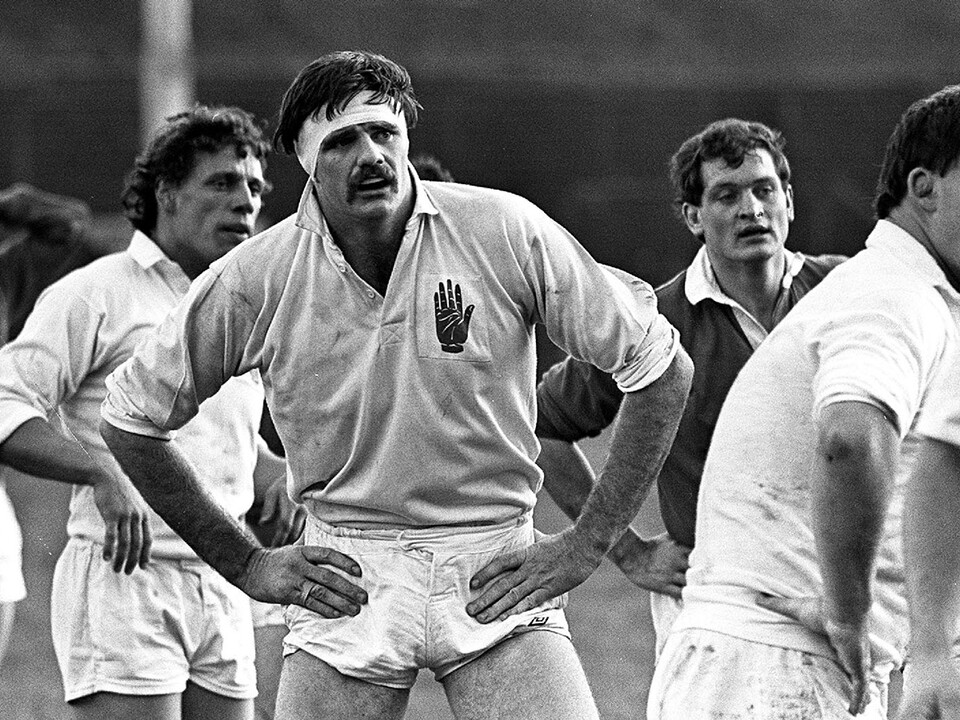
Guest writer, Rod Nawn, reflects on the career of Willie Anderson...
At the end of June, one very familiar and hugely respected member of the Ulster Rugby coaching staff will step down.
Not for one moment is he likely to step away from the club, and the famous grounds in Ravenhill Park, where he was part of so many memorable moments as an impassioned Ulster player and captain.
And the Kingspan Stadium is where some of the youngsters he has helped develop in his four years as Elite Player Development Officer with the Abbey Insurance Ulster Academy will create their own memories.
Willie Anderson was one of the first appointments to Academy chief Kieran Campbell’s staff, and he earned instant respect for his own achievements as a player, and his palpable will to see players fulfil their potential, maximise their skillsets, round their characters and, above all, to commit to the team.
He’s leaving an indelible mark on the club, his work with the Academy and as Coach of the Ulster A team, mirrored his own personality on the pitch: confident, focussed and determined to do better every day.
 Though he’ll certainly appreciate the opportunity to devote more time to his wife Heather, his children Jonathan, Thomas and Chloe and to life as a grandparent, Willie will inevitably remain an important figure in the sport.
But he should allow himself to reflect with some pride on a contribution to rugby as a player and coach, someone who never gave less than 100 per cent and demanded that of his charges, whether it was during his spells with Leinster, Scotland or with his club and those schools where he has brought his immense knowledge to bear.
One of the game’s genuine characters, Willie’s lifetime in rugby spanned playing with great distinction in the amateur era and morphing with ease into coaching in a sport which is, at its pinnacle, so profoundly professional. He ploughed a successful furrow in those different roles and in dramatically different periods because rugby has been a passion, a game to which he has given so much and which, he himself admits, has rewarded him with lifelong friendships forged on pitches, and in clubhouses, large and small, domestic and international.
Born in the village of Sixmilecross in Tyrone, he dipped his large toes in rugby football at Omagh Academy, and he was quickly acknowledged as an outstanding athlete with the potential to play at a high level.
As a student at Stranmillis College, he was a member of a fine vintage of Kings Scholars sides while, of course, becoming an integral part of a storied history at his beloved Dungannon club. He was determined to be the best he could be and was swiftly earmarked for a place in the Ulster pack of the late ‘70s and ‘80s.
His consistent displays in the second-row or at No.8 in Dungannon teams were always and typically on the front foot, and he thrived in an Ulster jersey when an old favourite at Stevenson Park, Jimmy Davidson, was given the opportunity in 1983 to develop his modernist approach to rugby coaching and fashion an unprecedented era of success for Ulster.
Willie was named in many an Ireland squad before he actually got the first of his 27 starts for his country at the age of 29. Mick Doyle was the national coach who pitched Anderson in against a dazzling Australian side which was stretched to the limit at Lansdowne Road but completed a Grand Slam in its 1984 autumn tour of Great Britain and Ireland.
The experience made Anderson hungry for more rugby at the highest level – and he had just four days to wait before he lined out - this time in Ulster shirt – against those same Wallaby tourists on an unforgettable November evening at Ravenhill.
Philip Rainey famously landed a late penalty to overcome by 15-13, visitors, as David Irwin’s team outsmarted and outfought the formidable Australians. Willie Anderson was the beating heart of a gifted forward unit, and in Brian McCall he had an equally energetic partner in the engine room.
‘Jimmy D’, as he was affectionately known, built his teams around trusted lieutenants and when he was finally to succeed Doyle to take charge of Ireland, Anderson was a regular occupant of a second-row berth. As captain at Dungannon he was a passionate leader-by-example, and perhaps his proudest moments where when he was to lead Ireland out.
Willie’s career has been dotted with amusing and colourful moments, and one of the most celebrated was when – encouraged by Davidson – he marched his team defiantly towards the All Blacks in 1989 in Dublin as they performed ‘the Haka’!
[caption id="attachment_34917" align="alignnone" width="630"] © Billy Stickland / INPHO[/caption]
Willie played his last match for Ireland as a 35-year-old and, having absorbed so much from those he had played for and against, it was hardly a surprise that he began his own coaching journey. Naturally it would be at Dungannon that he would take his first far-from-tentative steps, and on his watch Paddy Johns would mature into a prolific international lock and No.8, and Jeremy Davidson’s meteoric rise, would be nurtured.
Further, with players like David Humphreys, Justin Fitzpatrick, Jonny Bell, Bryn Cunningham, Gary Leslie and Allen Clarke at Dungannon, the club would become All Ireland League champions in 2001.
Note too how many of that group starred for Ulster’s European Cup-winning team of 1999!
Anderson had somehow combined his playing and coaching roles with a teaching career until a full-time post as Leinster’s Forwards Coach proved irresistible, and many believe that the foundations for that club’s dominance at home and in Europe for a decade were laid by Head Coach Matt Williams and the Ulsterman he wanted as his assistant.
When Australian Williams was headhunted by Scotland in 2003 he persuaded Anderson to join him at Murrayfield, and though it was a relatively short tenure there, Willie’s personal credentials were enhanced, and he’d have a stint at London Irish before returning to full-time teaching at Grosvenor Grammar School which, naturally, involved guiding the school’s rugby development.
He would find a real niche as someone who could inspire and improve youngsters, and he had remarkable success at Schools’ level, at Grosvenor and at Sullivan Upper. He returned to the club game in 2007 as Head Coach at Rainey Old Boys, a club he knew intimately through his time as a teacher in Magherafelt.
Anderson would be the first to admit that he had always felt he might have made a real contribution if he had been asked to lead Ulster, but if he was disappointed not to get that opportunity he was delighted when he was approached to take on a key role as Forwards Coach at the Academy.
His CV demonstrates that Willie Anderson identified and improved talent, and his time in charge of the Ulster A side showed that he’d instil the same passion and commitment to the cause which was his hallmark as a player.
An imposing presence, Willie has a reservoir of knowledge and experience of rugby, a game he embraced as a schoolboy before flowering as a towering influence for Dungannon, Ulster and Ireland.
In any history of Ulster and its development into a modern, professional structure built to endure, there will be a very particular chapter.
‘Just tell them Willie-boy was here’!
Though he’ll certainly appreciate the opportunity to devote more time to his wife Heather, his children Jonathan, Thomas and Chloe and to life as a grandparent, Willie will inevitably remain an important figure in the sport.
But he should allow himself to reflect with some pride on a contribution to rugby as a player and coach, someone who never gave less than 100 per cent and demanded that of his charges, whether it was during his spells with Leinster, Scotland or with his club and those schools where he has brought his immense knowledge to bear.
One of the game’s genuine characters, Willie’s lifetime in rugby spanned playing with great distinction in the amateur era and morphing with ease into coaching in a sport which is, at its pinnacle, so profoundly professional. He ploughed a successful furrow in those different roles and in dramatically different periods because rugby has been a passion, a game to which he has given so much and which, he himself admits, has rewarded him with lifelong friendships forged on pitches, and in clubhouses, large and small, domestic and international.
Born in the village of Sixmilecross in Tyrone, he dipped his large toes in rugby football at Omagh Academy, and he was quickly acknowledged as an outstanding athlete with the potential to play at a high level.
As a student at Stranmillis College, he was a member of a fine vintage of Kings Scholars sides while, of course, becoming an integral part of a storied history at his beloved Dungannon club. He was determined to be the best he could be and was swiftly earmarked for a place in the Ulster pack of the late ‘70s and ‘80s.
His consistent displays in the second-row or at No.8 in Dungannon teams were always and typically on the front foot, and he thrived in an Ulster jersey when an old favourite at Stevenson Park, Jimmy Davidson, was given the opportunity in 1983 to develop his modernist approach to rugby coaching and fashion an unprecedented era of success for Ulster.
Willie was named in many an Ireland squad before he actually got the first of his 27 starts for his country at the age of 29. Mick Doyle was the national coach who pitched Anderson in against a dazzling Australian side which was stretched to the limit at Lansdowne Road but completed a Grand Slam in its 1984 autumn tour of Great Britain and Ireland.
The experience made Anderson hungry for more rugby at the highest level – and he had just four days to wait before he lined out - this time in Ulster shirt – against those same Wallaby tourists on an unforgettable November evening at Ravenhill.
Philip Rainey famously landed a late penalty to overcome by 15-13, visitors, as David Irwin’s team outsmarted and outfought the formidable Australians. Willie Anderson was the beating heart of a gifted forward unit, and in Brian McCall he had an equally energetic partner in the engine room.
‘Jimmy D’, as he was affectionately known, built his teams around trusted lieutenants and when he was finally to succeed Doyle to take charge of Ireland, Anderson was a regular occupant of a second-row berth. As captain at Dungannon he was a passionate leader-by-example, and perhaps his proudest moments where when he was to lead Ireland out.
Willie’s career has been dotted with amusing and colourful moments, and one of the most celebrated was when – encouraged by Davidson – he marched his team defiantly towards the All Blacks in 1989 in Dublin as they performed ‘the Haka’!
[caption id="attachment_34917" align="alignnone" width="630"] © Billy Stickland / INPHO[/caption]
Willie played his last match for Ireland as a 35-year-old and, having absorbed so much from those he had played for and against, it was hardly a surprise that he began his own coaching journey. Naturally it would be at Dungannon that he would take his first far-from-tentative steps, and on his watch Paddy Johns would mature into a prolific international lock and No.8, and Jeremy Davidson’s meteoric rise, would be nurtured.
Further, with players like David Humphreys, Justin Fitzpatrick, Jonny Bell, Bryn Cunningham, Gary Leslie and Allen Clarke at Dungannon, the club would become All Ireland League champions in 2001.
Note too how many of that group starred for Ulster’s European Cup-winning team of 1999!
Anderson had somehow combined his playing and coaching roles with a teaching career until a full-time post as Leinster’s Forwards Coach proved irresistible, and many believe that the foundations for that club’s dominance at home and in Europe for a decade were laid by Head Coach Matt Williams and the Ulsterman he wanted as his assistant.
When Australian Williams was headhunted by Scotland in 2003 he persuaded Anderson to join him at Murrayfield, and though it was a relatively short tenure there, Willie’s personal credentials were enhanced, and he’d have a stint at London Irish before returning to full-time teaching at Grosvenor Grammar School which, naturally, involved guiding the school’s rugby development.
He would find a real niche as someone who could inspire and improve youngsters, and he had remarkable success at Schools’ level, at Grosvenor and at Sullivan Upper. He returned to the club game in 2007 as Head Coach at Rainey Old Boys, a club he knew intimately through his time as a teacher in Magherafelt.
Anderson would be the first to admit that he had always felt he might have made a real contribution if he had been asked to lead Ulster, but if he was disappointed not to get that opportunity he was delighted when he was approached to take on a key role as Forwards Coach at the Academy.
His CV demonstrates that Willie Anderson identified and improved talent, and his time in charge of the Ulster A side showed that he’d instil the same passion and commitment to the cause which was his hallmark as a player.
An imposing presence, Willie has a reservoir of knowledge and experience of rugby, a game he embraced as a schoolboy before flowering as a towering influence for Dungannon, Ulster and Ireland.
In any history of Ulster and its development into a modern, professional structure built to endure, there will be a very particular chapter.
‘Just tell them Willie-boy was here’!
Though he’ll certainly appreciate the opportunity to devote more time to his wife Heather, his children Jonathan, Thomas and Chloe and to life as a grandparent, Willie will inevitably remain an important figure in the sport.
But he should allow himself to reflect with some pride on a contribution to rugby as a player and coach, someone who never gave less than 100 per cent and demanded that of his charges, whether it was during his spells with Leinster, Scotland or with his club and those schools where he has brought his immense knowledge to bear.
One of the game’s genuine characters, Willie’s lifetime in rugby spanned playing with great distinction in the amateur era and morphing with ease into coaching in a sport which is, at its pinnacle, so profoundly professional. He ploughed a successful furrow in those different roles and in dramatically different periods because rugby has been a passion, a game to which he has given so much and which, he himself admits, has rewarded him with lifelong friendships forged on pitches, and in clubhouses, large and small, domestic and international.
Born in the village of Sixmilecross in Tyrone, he dipped his large toes in rugby football at Omagh Academy, and he was quickly acknowledged as an outstanding athlete with the potential to play at a high level.
As a student at Stranmillis College, he was a member of a fine vintage of Kings Scholars sides while, of course, becoming an integral part of a storied history at his beloved Dungannon club. He was determined to be the best he could be and was swiftly earmarked for a place in the Ulster pack of the late ‘70s and ‘80s.
His consistent displays in the second-row or at No.8 in Dungannon teams were always and typically on the front foot, and he thrived in an Ulster jersey when an old favourite at Stevenson Park, Jimmy Davidson, was given the opportunity in 1983 to develop his modernist approach to rugby coaching and fashion an unprecedented era of success for Ulster.
Willie was named in many an Ireland squad before he actually got the first of his 27 starts for his country at the age of 29. Mick Doyle was the national coach who pitched Anderson in against a dazzling Australian side which was stretched to the limit at Lansdowne Road but completed a Grand Slam in its 1984 autumn tour of Great Britain and Ireland.
The experience made Anderson hungry for more rugby at the highest level – and he had just four days to wait before he lined out - this time in Ulster shirt – against those same Wallaby tourists on an unforgettable November evening at Ravenhill.
Philip Rainey famously landed a late penalty to overcome by 15-13, visitors, as David Irwin’s team outsmarted and outfought the formidable Australians. Willie Anderson was the beating heart of a gifted forward unit, and in Brian McCall he had an equally energetic partner in the engine room.
‘Jimmy D’, as he was affectionately known, built his teams around trusted lieutenants and when he was finally to succeed Doyle to take charge of Ireland, Anderson was a regular occupant of a second-row berth. As captain at Dungannon he was a passionate leader-by-example, and perhaps his proudest moments where when he was to lead Ireland out.
Willie’s career has been dotted with amusing and colourful moments, and one of the most celebrated was when – encouraged by Davidson – he marched his team defiantly towards the All Blacks in 1989 in Dublin as they performed ‘the Haka’!
[caption id="attachment_34917" align="alignnone" width="630"] © Billy Stickland / INPHO[/caption]
Willie played his last match for Ireland as a 35-year-old and, having absorbed so much from those he had played for and against, it was hardly a surprise that he began his own coaching journey. Naturally it would be at Dungannon that he would take his first far-from-tentative steps, and on his watch Paddy Johns would mature into a prolific international lock and No.8, and Jeremy Davidson’s meteoric rise, would be nurtured.
Further, with players like David Humphreys, Justin Fitzpatrick, Jonny Bell, Bryn Cunningham, Gary Leslie and Allen Clarke at Dungannon, the club would become All Ireland League champions in 2001.
Note too how many of that group starred for Ulster’s European Cup-winning team of 1999!
Anderson had somehow combined his playing and coaching roles with a teaching career until a full-time post as Leinster’s Forwards Coach proved irresistible, and many believe that the foundations for that club’s dominance at home and in Europe for a decade were laid by Head Coach Matt Williams and the Ulsterman he wanted as his assistant.
When Australian Williams was headhunted by Scotland in 2003 he persuaded Anderson to join him at Murrayfield, and though it was a relatively short tenure there, Willie’s personal credentials were enhanced, and he’d have a stint at London Irish before returning to full-time teaching at Grosvenor Grammar School which, naturally, involved guiding the school’s rugby development.
He would find a real niche as someone who could inspire and improve youngsters, and he had remarkable success at Schools’ level, at Grosvenor and at Sullivan Upper. He returned to the club game in 2007 as Head Coach at Rainey Old Boys, a club he knew intimately through his time as a teacher in Magherafelt.
Anderson would be the first to admit that he had always felt he might have made a real contribution if he had been asked to lead Ulster, but if he was disappointed not to get that opportunity he was delighted when he was approached to take on a key role as Forwards Coach at the Academy.
His CV demonstrates that Willie Anderson identified and improved talent, and his time in charge of the Ulster A side showed that he’d instil the same passion and commitment to the cause which was his hallmark as a player.
An imposing presence, Willie has a reservoir of knowledge and experience of rugby, a game he embraced as a schoolboy before flowering as a towering influence for Dungannon, Ulster and Ireland.
In any history of Ulster and its development into a modern, professional structure built to endure, there will be a very particular chapter.
‘Just tell them Willie-boy was here’!