
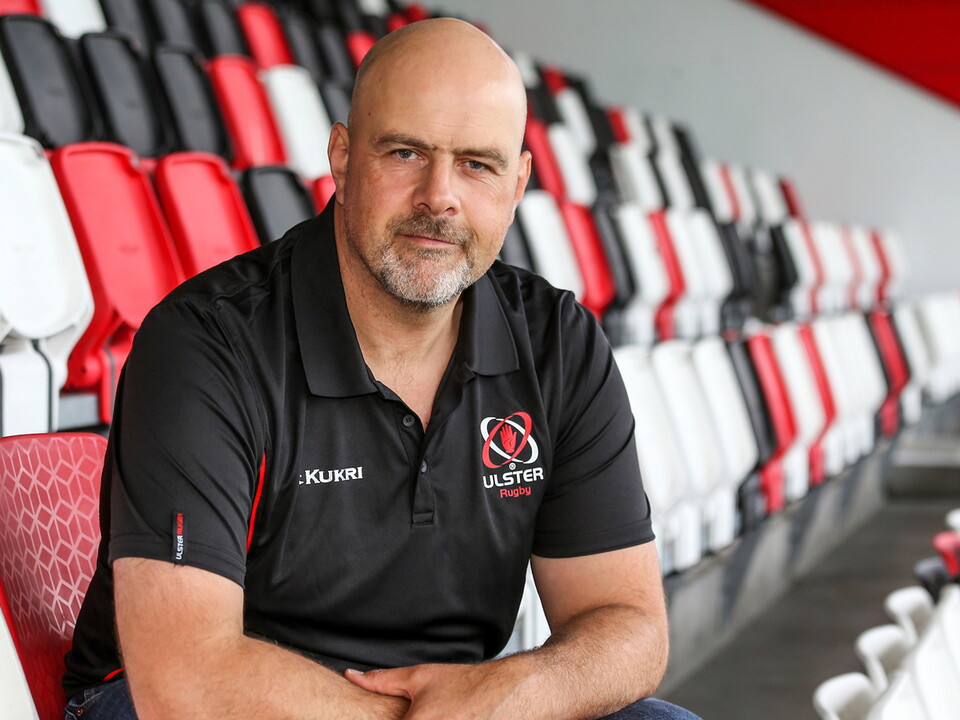
We caught up with Dan McFarland to look back at his first season as Head Coach of Ulster…
What is your assessment of the season?
Coming into the season, I didn’t have any specific expectations in terms of results. However, I had very specific goals in terms of what we wanted to achieve culturally and in the way that we played.
We were really pleased with the work that the guys have done on the pitch and the development that we’ve made there. We demonstrated a passion and competitiveness that is so crucial to the fabric of Ulster Rugby.
We’ve been involved in the business end of both competitions [Heineken Champions Cup and Guinness PRO14], and that was terrific. There are only eight teams in Europe that get into the knock-out stages every year and we were one of them. That’s a pretty big achievement and that’s a testament to the way the lads played in the group stages.
To come second in our conference in the PRO14, which was tough with Leinster, Benetton, Scarlets and Edinburgh in there, was really pleasing.
Having said that, those positions were fought for. I think there were 15 games in which we finished within eight points of the opposition, and we only lost two of those. So by no stretch of the imagination were we cruising into play-off games like Munster, Glasgow and Leinster. We had to fight for every inch, every point. That’s a massive positive but it also demonstrates that there’s a huge amount of work to do to ensure that we can do that year in, year out.
 Did you plan on giving exposure to so many Academy players during the 2018/19 season?
When I was coming over here I was obviously very well acquainted with the senior squad, but I didn’t really know much about the Academy players. I met Kieran Campbell and his support staff very early on and got to understand their thoughts on the players. As you’d expect, they were very positive about them.
We were unlucky enough to have injuries to senior players in some positions, but we had intended to give exposure to some of the Academy guys anyway. As a coaching team, we have to be brave enough to say ‘this is a talented young man and we think he can go out there and do his best and not be overawed’.
For the vast majority of the season, they did that very well. Does that turn them into top quality professional rugby players? No it doesn’t, but it’s the first step on the ladder. What does is the ability to grind it out when times are tough and they’re not getting the chances, and to continually develop during those periods so that when the opportunity comes or is earned, they’re ready to perform. That’s the key to becoming an elite professional rugby player.
The likes of James Hume, Rob Baloucoune, Angus Kernohan, Mikey Lowry, Tom O’Toole and Eric O’Sullivan still have a lot of work to do, but they’ve taken one step on the ladder and they’ll be a little bit more experienced if and when they get a chance next season.
How have you found your first season as a Head Coach?
I’m 47 years old and I’ve been an Assistant Coach for a long time. I was never tripping over myself to become a Head Coach. That was always an ambition, but I needed to be in a position where I was ready to do that job, and I was ready.
Does that mean that I’m the complete Head Coach? Of course it doesn’t. As long as I’m coaching, I’ll be learning.
But in order to do that, you’ve got to have the support around you, and that came on all levels. It certainly came on the playing level where the players were hungry to get better, to learn and to buy into the things we are trying to do. The coaching staff have been tremendous as well. We have a young coaching team here and they want to learn, but they have also helped me a lot. There was huge change across the wider support staff this year and those guys did a great job to get their departments organised and functioning at a high level.
It’s that background functioning and how you run the team on a day-to-day basis that is the biggest part of the learning curve for me. We will continue to develop that.
There were a number of departures at the end of the season. What would you like to say about those people who have moved on?
A lot has been said about Rory (Best) and Darren (Cave) in recent weeks, and rightly so – they have both been magnificent servants to Ulster Rugby and will leave a lasting legacy.
Pete (Nelson) is a player who can be very proud of what he has contributed during his career at Ulster Rugby, which spans eight years including his time in the Academy. His work ethic and resilience, particularly when coming back from some difficult injuries, are a great example to others, and he displayed no shortage of skill as well.
We will also say goodbye to David (Busby), Jack (Owens) and Caleb (Montgomery) who have come through the pathway here in Ulster, and also Ian (Nagle), who made a positive contribution since joining us on loan in November.
They haven’t played as much as they would have liked but they have played crucial roles for us within the squad and have helped drive standards, which permeates through the squad.
Aaron (Dundon) is moving on, but the work that he’s done, particularly in developing our young front row players, has been really good. We’ve taken considerable steps forward in that area. Kevin (Geary) and Chris (Hagan) have also played integral roles within the set-up for a number of years and leave us in a better place due to their involvement. I would particularly like to pay tribute to Kev who did a great job leading the Athletic Performance programme prior to Tom’s arrival and has been tireless in supporting myself and Tom throughout the year.
We’d like to thank all those who are departing for their professionalism and commitment during their time with us, and wish them well in their future endeavours.
On the flip side of that, there are a number of new faces coming in. What excites you about them?
Roddy (Grant) is coming in as Forwards Coach. Roddy worked with me with the national team in Scotland and he’s a very enthusiastic young coach as well. He’s done his time working under Richard Cockerill and his intellectual property will be extremely valuable. I know the quality of his coaching and he’ll bring something new, both to the coaching team and to the playing group. He’s really excited about coming in, he’ll buy into what we’re about and it will be good to have him here.
Having Jack McGrath, Sam Carter and Matt Faddes on board, not only quality players, but experienced and knowledgeable, will be really positive for us next season. For an organisation to learn and grow, it can’t just look within, it has to look outside as well, and part of that is recruitment and part of that is being open-minded to ideas.
We will also have Gareth Milasinovich and Bill Johnston with us next season. They have a lot of potential and I think they will be really strong options for us as well.
The squad is developing. We have young players coming through and that’s building important depth. We need to have quality throughout the squad; sometimes that’s down to recruitment, a lot of the time it’s down to bringing the young guys through. Getting a healthy mixture of the two is really important.
What are your aims for next season?
The key thing is that we want to continue to develop as a team, we want to develop our playing style, we want to develop our culture and we want to push forward with the aim of being a team that can consistently compete for championships. We’ll continue to assess ourselves on how well we’re doing that and the rate at which we’re doing that.
We must continue to be aware that we are in a very competitive league and that while we are striving for improvement, so is every other team; this was exemplified by the jump that Benetton made at the expense of Edinburgh and Scarlets, both of whom are very good teams. So we’ll focus on our own rate of improvement and hopefully that’ll reward us with competing for championships again.
Did you plan on giving exposure to so many Academy players during the 2018/19 season?
When I was coming over here I was obviously very well acquainted with the senior squad, but I didn’t really know much about the Academy players. I met Kieran Campbell and his support staff very early on and got to understand their thoughts on the players. As you’d expect, they were very positive about them.
We were unlucky enough to have injuries to senior players in some positions, but we had intended to give exposure to some of the Academy guys anyway. As a coaching team, we have to be brave enough to say ‘this is a talented young man and we think he can go out there and do his best and not be overawed’.
For the vast majority of the season, they did that very well. Does that turn them into top quality professional rugby players? No it doesn’t, but it’s the first step on the ladder. What does is the ability to grind it out when times are tough and they’re not getting the chances, and to continually develop during those periods so that when the opportunity comes or is earned, they’re ready to perform. That’s the key to becoming an elite professional rugby player.
The likes of James Hume, Rob Baloucoune, Angus Kernohan, Mikey Lowry, Tom O’Toole and Eric O’Sullivan still have a lot of work to do, but they’ve taken one step on the ladder and they’ll be a little bit more experienced if and when they get a chance next season.
How have you found your first season as a Head Coach?
I’m 47 years old and I’ve been an Assistant Coach for a long time. I was never tripping over myself to become a Head Coach. That was always an ambition, but I needed to be in a position where I was ready to do that job, and I was ready.
Does that mean that I’m the complete Head Coach? Of course it doesn’t. As long as I’m coaching, I’ll be learning.
But in order to do that, you’ve got to have the support around you, and that came on all levels. It certainly came on the playing level where the players were hungry to get better, to learn and to buy into the things we are trying to do. The coaching staff have been tremendous as well. We have a young coaching team here and they want to learn, but they have also helped me a lot. There was huge change across the wider support staff this year and those guys did a great job to get their departments organised and functioning at a high level.
It’s that background functioning and how you run the team on a day-to-day basis that is the biggest part of the learning curve for me. We will continue to develop that.
There were a number of departures at the end of the season. What would you like to say about those people who have moved on?
A lot has been said about Rory (Best) and Darren (Cave) in recent weeks, and rightly so – they have both been magnificent servants to Ulster Rugby and will leave a lasting legacy.
Pete (Nelson) is a player who can be very proud of what he has contributed during his career at Ulster Rugby, which spans eight years including his time in the Academy. His work ethic and resilience, particularly when coming back from some difficult injuries, are a great example to others, and he displayed no shortage of skill as well.
We will also say goodbye to David (Busby), Jack (Owens) and Caleb (Montgomery) who have come through the pathway here in Ulster, and also Ian (Nagle), who made a positive contribution since joining us on loan in November.
They haven’t played as much as they would have liked but they have played crucial roles for us within the squad and have helped drive standards, which permeates through the squad.
Aaron (Dundon) is moving on, but the work that he’s done, particularly in developing our young front row players, has been really good. We’ve taken considerable steps forward in that area. Kevin (Geary) and Chris (Hagan) have also played integral roles within the set-up for a number of years and leave us in a better place due to their involvement. I would particularly like to pay tribute to Kev who did a great job leading the Athletic Performance programme prior to Tom’s arrival and has been tireless in supporting myself and Tom throughout the year.
We’d like to thank all those who are departing for their professionalism and commitment during their time with us, and wish them well in their future endeavours.
On the flip side of that, there are a number of new faces coming in. What excites you about them?
Roddy (Grant) is coming in as Forwards Coach. Roddy worked with me with the national team in Scotland and he’s a very enthusiastic young coach as well. He’s done his time working under Richard Cockerill and his intellectual property will be extremely valuable. I know the quality of his coaching and he’ll bring something new, both to the coaching team and to the playing group. He’s really excited about coming in, he’ll buy into what we’re about and it will be good to have him here.
Having Jack McGrath, Sam Carter and Matt Faddes on board, not only quality players, but experienced and knowledgeable, will be really positive for us next season. For an organisation to learn and grow, it can’t just look within, it has to look outside as well, and part of that is recruitment and part of that is being open-minded to ideas.
We will also have Gareth Milasinovich and Bill Johnston with us next season. They have a lot of potential and I think they will be really strong options for us as well.
The squad is developing. We have young players coming through and that’s building important depth. We need to have quality throughout the squad; sometimes that’s down to recruitment, a lot of the time it’s down to bringing the young guys through. Getting a healthy mixture of the two is really important.
What are your aims for next season?
The key thing is that we want to continue to develop as a team, we want to develop our playing style, we want to develop our culture and we want to push forward with the aim of being a team that can consistently compete for championships. We’ll continue to assess ourselves on how well we’re doing that and the rate at which we’re doing that.
We must continue to be aware that we are in a very competitive league and that while we are striving for improvement, so is every other team; this was exemplified by the jump that Benetton made at the expense of Edinburgh and Scarlets, both of whom are very good teams. So we’ll focus on our own rate of improvement and hopefully that’ll reward us with competing for championships again.
Did you plan on giving exposure to so many Academy players during the 2018/19 season?
When I was coming over here I was obviously very well acquainted with the senior squad, but I didn’t really know much about the Academy players. I met Kieran Campbell and his support staff very early on and got to understand their thoughts on the players. As you’d expect, they were very positive about them.
We were unlucky enough to have injuries to senior players in some positions, but we had intended to give exposure to some of the Academy guys anyway. As a coaching team, we have to be brave enough to say ‘this is a talented young man and we think he can go out there and do his best and not be overawed’.
For the vast majority of the season, they did that very well. Does that turn them into top quality professional rugby players? No it doesn’t, but it’s the first step on the ladder. What does is the ability to grind it out when times are tough and they’re not getting the chances, and to continually develop during those periods so that when the opportunity comes or is earned, they’re ready to perform. That’s the key to becoming an elite professional rugby player.
The likes of James Hume, Rob Baloucoune, Angus Kernohan, Mikey Lowry, Tom O’Toole and Eric O’Sullivan still have a lot of work to do, but they’ve taken one step on the ladder and they’ll be a little bit more experienced if and when they get a chance next season.
How have you found your first season as a Head Coach?
I’m 47 years old and I’ve been an Assistant Coach for a long time. I was never tripping over myself to become a Head Coach. That was always an ambition, but I needed to be in a position where I was ready to do that job, and I was ready.
Does that mean that I’m the complete Head Coach? Of course it doesn’t. As long as I’m coaching, I’ll be learning.
But in order to do that, you’ve got to have the support around you, and that came on all levels. It certainly came on the playing level where the players were hungry to get better, to learn and to buy into the things we are trying to do. The coaching staff have been tremendous as well. We have a young coaching team here and they want to learn, but they have also helped me a lot. There was huge change across the wider support staff this year and those guys did a great job to get their departments organised and functioning at a high level.
It’s that background functioning and how you run the team on a day-to-day basis that is the biggest part of the learning curve for me. We will continue to develop that.
There were a number of departures at the end of the season. What would you like to say about those people who have moved on?
A lot has been said about Rory (Best) and Darren (Cave) in recent weeks, and rightly so – they have both been magnificent servants to Ulster Rugby and will leave a lasting legacy.
Pete (Nelson) is a player who can be very proud of what he has contributed during his career at Ulster Rugby, which spans eight years including his time in the Academy. His work ethic and resilience, particularly when coming back from some difficult injuries, are a great example to others, and he displayed no shortage of skill as well.
We will also say goodbye to David (Busby), Jack (Owens) and Caleb (Montgomery) who have come through the pathway here in Ulster, and also Ian (Nagle), who made a positive contribution since joining us on loan in November.
They haven’t played as much as they would have liked but they have played crucial roles for us within the squad and have helped drive standards, which permeates through the squad.
Aaron (Dundon) is moving on, but the work that he’s done, particularly in developing our young front row players, has been really good. We’ve taken considerable steps forward in that area. Kevin (Geary) and Chris (Hagan) have also played integral roles within the set-up for a number of years and leave us in a better place due to their involvement. I would particularly like to pay tribute to Kev who did a great job leading the Athletic Performance programme prior to Tom’s arrival and has been tireless in supporting myself and Tom throughout the year.
We’d like to thank all those who are departing for their professionalism and commitment during their time with us, and wish them well in their future endeavours.
On the flip side of that, there are a number of new faces coming in. What excites you about them?
Roddy (Grant) is coming in as Forwards Coach. Roddy worked with me with the national team in Scotland and he’s a very enthusiastic young coach as well. He’s done his time working under Richard Cockerill and his intellectual property will be extremely valuable. I know the quality of his coaching and he’ll bring something new, both to the coaching team and to the playing group. He’s really excited about coming in, he’ll buy into what we’re about and it will be good to have him here.
Having Jack McGrath, Sam Carter and Matt Faddes on board, not only quality players, but experienced and knowledgeable, will be really positive for us next season. For an organisation to learn and grow, it can’t just look within, it has to look outside as well, and part of that is recruitment and part of that is being open-minded to ideas.
We will also have Gareth Milasinovich and Bill Johnston with us next season. They have a lot of potential and I think they will be really strong options for us as well.
The squad is developing. We have young players coming through and that’s building important depth. We need to have quality throughout the squad; sometimes that’s down to recruitment, a lot of the time it’s down to bringing the young guys through. Getting a healthy mixture of the two is really important.
What are your aims for next season?
The key thing is that we want to continue to develop as a team, we want to develop our playing style, we want to develop our culture and we want to push forward with the aim of being a team that can consistently compete for championships. We’ll continue to assess ourselves on how well we’re doing that and the rate at which we’re doing that.
We must continue to be aware that we are in a very competitive league and that while we are striving for improvement, so is every other team; this was exemplified by the jump that Benetton made at the expense of Edinburgh and Scarlets, both of whom are very good teams. So we’ll focus on our own rate of improvement and hopefully that’ll reward us with competing for championships again.